
Kindergarten: the origins of an idea that transformed early childhood education.
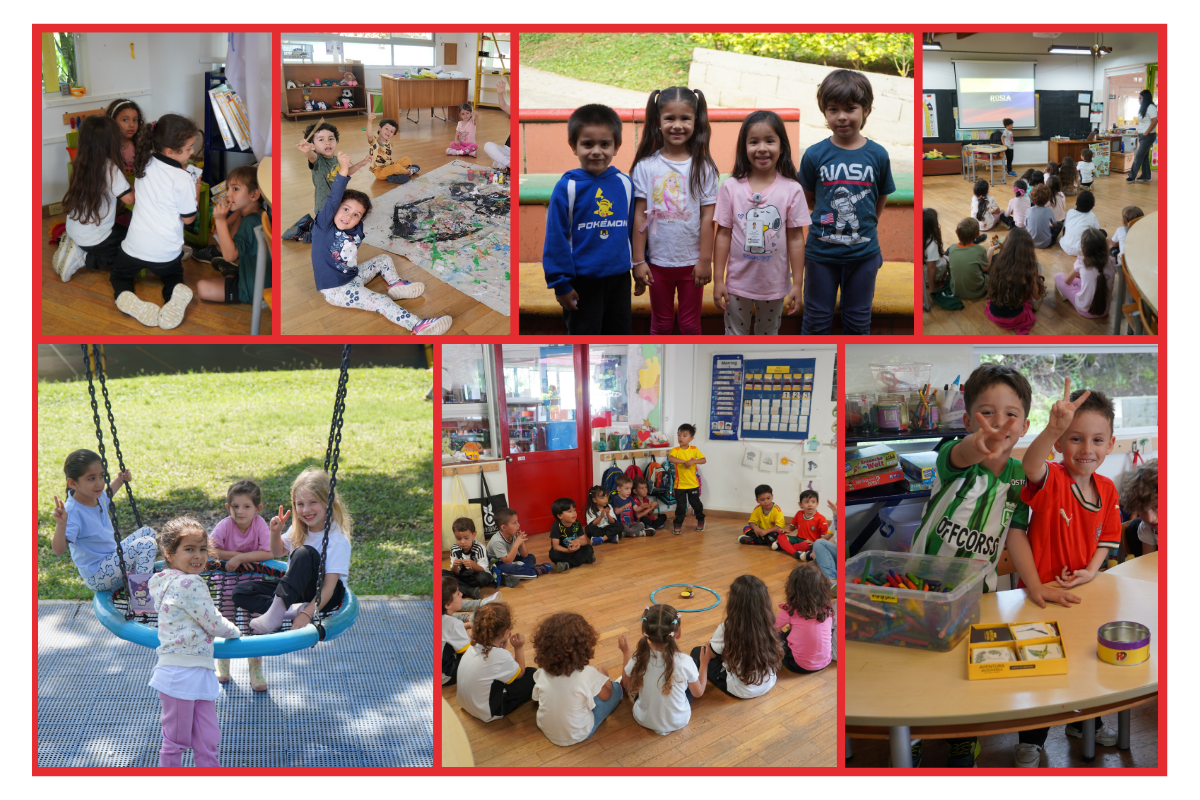
There was a time when nobody asked a child how they were learning or how they felt. There was no need. They were little adults, unfinished versions of something that was expected to arrive quickly, almost without transition. We discuss this in this edition with the Headteacher of the Deutsche Schule Medellín (German School of Medellín), Arne Gudjons, and his father, Herbert Gudjons, who taught for over two decades at the University of Hamburg.
That idea began to break down in Germany in the early 19th century. Cities were growing, factories were multiplying and work was reshaping everyday life. Against this backdrop, many women left home to work, and children were left to their own devices. As the educator Herbert Gudjons explains: “Housewives began working in factories, which left children unsupervised, left to their own devices”.
Children were left to their own devices, and someone, at some point, decided that the answer could not simply be to find them a place. As society industrialized, so too did pedagogical thought. Philosophers and educators began to question the entrenched idea of treating children as miniature adults. At that crossroads between social urgency and pedagogical reflection emerged Friedrich Fröbel, a disciple of Johann Heinrich Pestalozzi, a patient observer of childhood and someone who dared to take seriously something that had until then been underestimated, that children have their own development.
The origins of the kindergarten: a word that changed everything.
In 1840, Fröbel founded the first Kindergarten in Bad Blankenburg, Germany; in English, a nursery school. “A child should grow like a plant in a garden. The educator is like a gardener who tends to that growth”, explains Herbert Gudjons. And that changed the image people had of the teacher, as they ceased to be the one who shaped, to become the carer. They ceased to impose a form, to become someone who accompanied a process, that of growth.
On the other hand, Fröbel placed at the center something that until then had been considered irrelevant: play. Something disruptive when one considers that until then the world valued discipline and utility. “Play is not just a worthless pastime… it is the driving force behind children’s learning”, explains Gudjons. Play ceased to be a distraction and became a legitimate way of discovering the world.
Play: the foundation of early childhood education.
From then, kindergarten was built on principles that remain relevant today: trust in the child’s autonomy, learning that does not separate the cognitive from the emotional, and a constant connection with nature. The idea spread and strengthened. Within a few decades, it crossed borders, adapted to different contexts, and at times was used for purposes that strayed from its origins. But its core remained, the child is a developing being, not an adult in waiting.
Today, when we talk about active learning or social-emotional development in pre-school education, we are revisiting that very same conversation. As Arne Gudjons, Headteacher of the Deutsche Schule Medellín (German School of Medellín), points out, “Back then, children were treated like little adults… and that began to change with Friedrich Fröbel’s ideas”. That change is being brought to life in every classroom, in every experience that puts the child at the center.
Kindergarten today: bilingualism, independence and intercultural understanding.
At the Deutsche Schule Medellín (German School of Medellin), one of Medellín’s longest-established multilingual schools, this tradition is brought to life every day. The Kindergarten draws on this legacy and brings it into the present: play as a starting point, independence from an early age, and an education that engages the mind, body and emotions. Added to this is something Fröbel could not have anticipated, but which is fundamental today: interculturalism.
Language learning is not an academic requirement, but something that happens naturally through play and everyday interaction. “Early language learning and intercultural education are now very important elements in the Kindergarten”, acknowledges Herbert Gudjons. More than 180 years on, the underlying idea has not changed much, growing up, just like in any garden, takes time.
Are you looking for a multilingual school in Medellín for your child?
Discover how this approach comes to life every day at the Deutsche Schule Medellín and take the first step in the admissions process. Visit our admissions page and make the beginning of this story the start of your children’s journey too.
Find out about the Pre-Kindergarten admissions process
+57 (604) 2818811, ext. 131
[email protected]