
Learning German in the kitchen: tasty ideas for practising the language at home
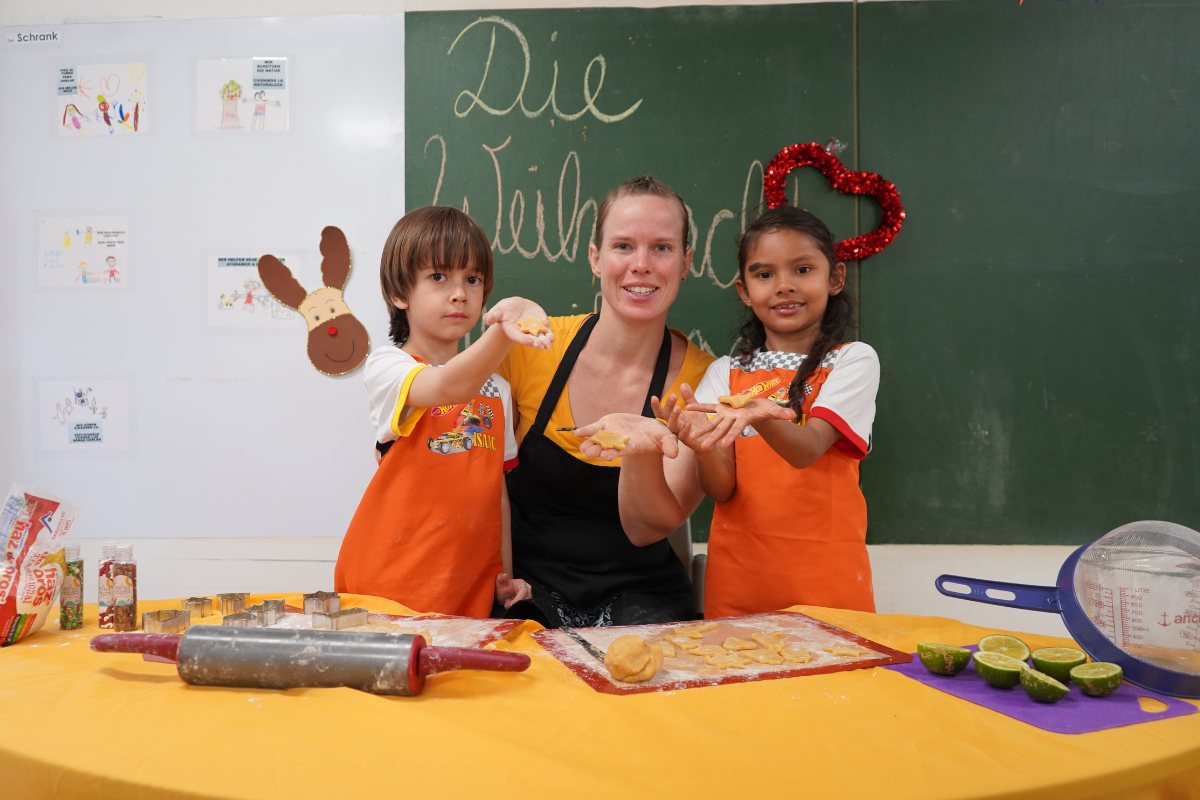
What if learning a language could also smell like melted butter and taste like apple strudel? Studying German doesn't have to be all about books and exercises: the kitchen is the perfect place to learn with all your senses.
This time, we share with you simple, fun and tasty ideas for practising German at home, cooking and exploring its culinary culture with your family.
1. Learn vocabulary by cooking traditional dishes.
The best way to learn new words is to use them in context. Cooking German recipes allows you to practise verbs, names of ingredients and everyday phrases without realizing it. Here are three great recipes to get you started:
🥔 Kartoffelsalat (potato salad): a cold recipe, easy to prepare and perfect for learning verbs such as schneiden (to cut), mischen (to mix) or würzen (to season).
🥞 Pfannkuchen (German pancakes): help to incorporate vocabulary such as Mehl (flour), Eier (eggs), Milch (milk) and to discover differences with other versions around the world.
🌭 Bratwurst mit Sauerkraut: more advanced, ideal for talking about fermentation, intense flavours and southern German traditions.
💡 Tip: write down the recipe in German, underline the words you don't know and make a glossary out of them. You can stick it on the fridge or on the kitchen wall.
2. Use all your senses to retain what you have learnt.
Sensory learning is key, especially for children and young people. Hearing the sound of dough being knead, smelling a mixture of spices, or tasting something new with your eyes closed activates areas of the brain that help you memorize better. Every meal becomes a language immersion experience.
3. Take advantage of digital content
Cooking is also learnt by watching and listening. Here are some ideas to explore:
• YouTube: search for step-by-step recipes in German, such as ‘Deutsches Frühstück zubereiten’ or ‘Einfache deutsche Rezepte’. Many have subtitles.
• Instagram: follow accounts like @germanium.online or @germanwithfrauflamm to learn useful expressions with pictures and short videos.
• Podcast: If you're already at a higher level, listen to Fiete Gastro or Küchenherde, where they talk about cooking, culture and current affairs.
4. Organise a German themed evening.
Make dinner a shared learning activity. To do this, you can:
🎉 Prepare a full menu with starter, main course and dessert.
🎼 Play German music in the background (try Herbert Grönemeyer or LEA).
🗣️ Use phrases like Was möchtest du trinken? or Guten Appetit!
📝 Make flashcards with the names of German dishes and their ingredients.
A great way to practise conversation!
5. Learn expressions with flavour
German is full of expressions related to food. Here are a few:
- Alles in Butter (everything is fine - literally, everything in butter’).
- Das ist nicht mein Bier (that's none of my business)
- Er will eine Extrawurst (he wants a special treat - literally, he wants an extra sausage’)
You can play guessing games, draw them or create short dialogues using them.
Ready to give it a try?
Learning German doesn't have to be complicated or boring. On the contrary, it can be a tasty, fun experience full of family moments. Cooking is a lively way of getting to know another culture, understanding its customs and practising day to day language.
Do you want to know more about our intercultural educational approach?
At Deutsche Schule Medellín (Colegio Alemán Medellín) we believe in experiential learning and connecting with culture through multiple languages. Visit our admissions section and find out how we make this possible. Click here.