
How do we experience democracy at the Deutsche Schule Medellín?
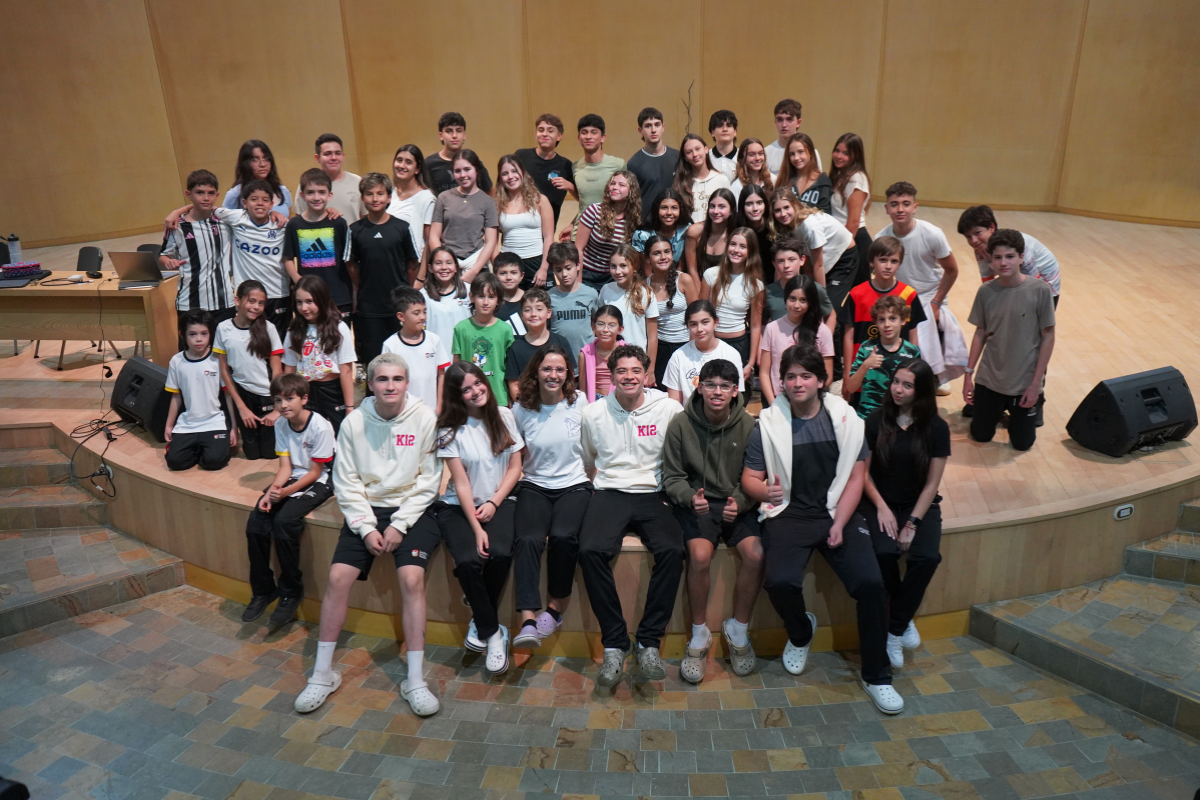
At the Deutsche Schule Medellín (German School of Medellín), democracy goes beyond school elections for the student representative or for representatives to various academic and administrative bodies. It is a fundamental part of the educational experience throughout school life: from Kindergarten to Year 12, from the classroom to break time, from an ATL (After-School Activity) to requesting a second exam marker. “At the school, democracy is something that, as well as being learnt, is discussed and practised”, explains Pablo Andrés Patiño, Extended essay Coordinator at the DSM.
Much more than just voting
Every year, pupils take part in the election of the student representative and class representatives. This is perhaps the moment when democracy is experienced in its purest form. However, prior to this, in Social Studies lessons, the concept has already been addressed explicitly: what it means, what it entails, and why it goes beyond simply ‘raising a hand’ or deciding by majority vote.
Groups from Pre-Kindergarten to Year 10 begin the year with an introduction to the concept. The aim is for them to understand that democracy involves not only voting, but also discussion, critical analysis and accountability for collective decisions.
This is put into practice almost immediately in the school’s electoral process, when pupils apply what they have learnt, question practices, compare arguments, and experience within an educational setting the tensions inherent in any democratic exercise. But at the DSM, democracy goes much further.
Independence and critical thinking: The foundation of education
For Paula Álvarez, the school’s Deputy Headteacher, democracy is not an isolated concept, but is deeply linked to critical thinking and autonomy. From nursery school onwards, the children work on projects that they themselves propose and choose. They decide how to develop them, how to present them, and within the limits of what the school can offer, which paths to take. As they progress through school, this capacity for choice expands, they select their extracurricular activities according to their interests, choose a musical instrument and opt for different activities, in line with their learning process.
Read also: Researching to understand the world: The GIB Extended essay at the Deutsche Schule Medellín
Learning to disagree
The school environment is not immune to national and global political realities. Today, in many parts of the world, polarization is stronger than ever; for this reason, the school faces an additional challenge: teaching pupils to coexist with differing opinions.
Two institutional pillars come into play here. The first is the School Coexistence Committee, which has broadened its scope beyond traditional discipline and prioritizes reconciliation between students. This allows conflict to be transformed into dialogue. Not every disagreement ends in a sanction; many become opportunities to listen, argue and recalibrate positions.
The second pillar is the institution’s openness to argument. For example, a student who disagrees with a grade may request a second exam marker. “To do so, they must construct a solid, well-founded and thoughtful argument. In that process, they often discover that their initial disagreement requires nuance; at other times, they manage to demonstrate that there are aspects worth reviewing” says Pablo Andrés.
Art, sport and science: Small communities in action
ATLs (after school activities), schools of music, sport and art, and the robotics and Little Scientists programmes are important settings for practising democracy.
Choosing to play an instrument is a personal decision, being part of an orchestra means understanding that the result depends on the whole group. Joining a sports team requires taking on a role, respecting rules and coordinating efforts. Presenting a project at a Robotics Fest involves building it collectively and presenting proposals.
In each of these settings, skills such as collaborative work, shared responsibility and a sense of belonging to a community are reinforced.
Nurturing global citizens
The aim is for students to develop a strong democratic mindset. “At the Deutsche Schule Medellín (Medellín German School), democracy is understood as the ability to make informed decisions, the willingness to listen and be heard, the ability to argue respectfully, the autonomy to make responsible choices, and the awareness that every individual decision has a collective impact” says Pablo Andrés. This education is reinforced through experiences such as the Creativity, Activity and Service (CAS) programme, international student exchanges and exposure to diverse realities, where students not only acquire knowledge, but also learn to engage critically with the world.
A habit that is shaped every day
At the DSM, democracy goes further. It is present in every project chosen in the nursery, in every debate in social studies, in every mediation process, in every election of a representative, in every argumentative essay and in every agreement reached as a team. Other stakeholders also democratically elect their representatives for the various institutional bodies: parents for the Parents’ Council, and alumni and staff for the Board of Governors.
It is a progressive and conscious process. A habit formed through constant practice. Shaping global citizens with a democratic mindset means teaching them to think, to engage in dialogue and to take responsibility for their place in society. In addition to encouraging their participation through voting,
Find out how this holistic education comes to life at every stage of schooling. Visit the Admissions section on our website, by clicking here www.dsmedellin.edu.co and discover how you can become part of the Deutsche Schule Medellín.